A sectional can anchor a living room, but its size and shape make rug selection less straightforward. The right rug connects the seating area, leaves comfortable walking space, and gives the room a clear visual center. This guide explores popular rug types for 2026, from low-pile wool to textured natural fibers and easy-care synthetics. Each offers different benefits, and none suits every home.
Learning how to match a rug with a sectional sofa starts with measuring the room, not choosing a color. Note the sectional’s full footprint, including its chaise, then consider how much rug should sit beneath the front legs. A rug that is too small can make generous seating feel crowded; one that is too large may cover useful floor space. Scale matters. Texture and construction matter, too. A dense, low-pile rug is often easier to use beneath frequently moved furniture, while a softer pile can add comfort in a quieter lounge area. For homes with pets or children, stain resistance and cleaning instructions deserve close attention. Check the maker’s care guidance before buying.
Color is more flexible than many shoppers expect. A patterned rug can soften the solid outline of a sectional, while a muted design can calm a room with bold upholstery. Still, product photos rarely show exact color or texture. Samples help, though they are not perfect. Lighting, flooring, and everyday wear can change how a rug looks at home. Use the ideas ahead as practical starting points, then judge the final choice against your room, routine, and budget.
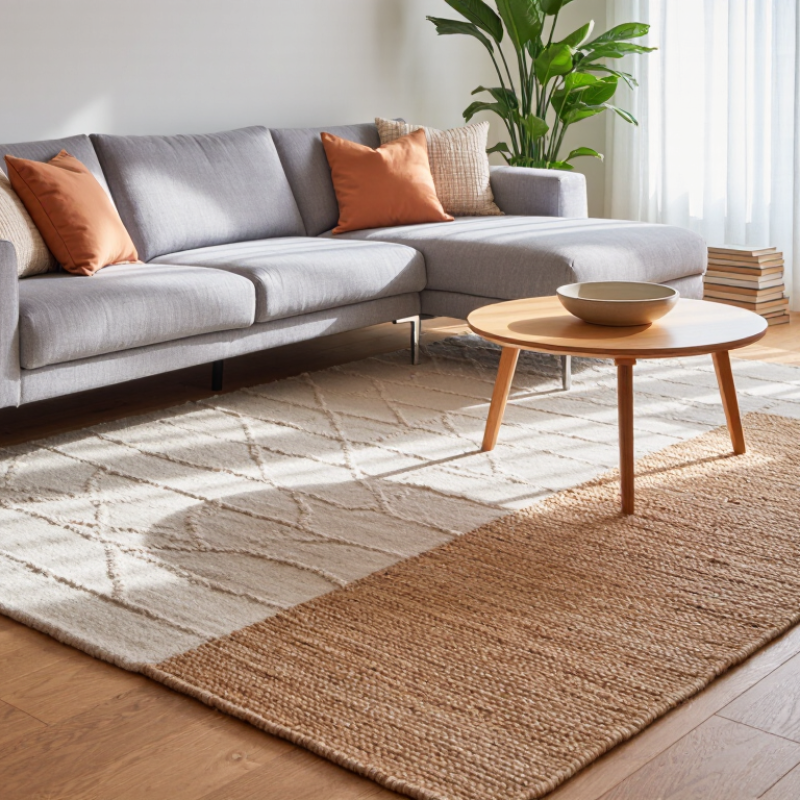
Sectional living rooms need rugs that define the seating area without making the sofa feel stranded. Low-pile wool or tightly woven flatweaves work well beneath frequently used seating because chair legs move more easily. They also make crumbs and dust easier to spot during routine cleaning. Pile matters. Plush rugs feel softer underfoot, but thick edges can catch doors or create awkward transitions near a hallway. With a large L-shaped sectional, aim to place at least the front legs on the rug. If space allows, fit all the legs on it; this often makes the seating group feel connected.
Natural-fiber rugs, such as jute or sisal, add a dry, textured look to relaxed rooms. Their coarser surfaces may feel uncomfortable for floor play, and some fibers show spills quickly. Washable, low-pile synthetic rugs can suit homes with pets or frequent snack spills, though their texture and color vary.
Not always. Traditional patterns can disguise everyday marks, while simple geometric designs echo a sectional’s strong lines. Choose colors that relate to nearby cushions or curtains rather than matching every shade exactly; too much coordination can feel flat. Measure the sofa’s full footprint and leave some visible flooring around the rug. Room shape may still call for compromise, and that part can be tricky.
Low-pile wool and tightly woven flatweaves let chair legs move easily. Crumbs and dust are easier to spot. That helps.
Place at least the front legs on the rug. If space allows, fit all legs to connect the seating group.
It feels soft underfoot, but thick edges may catch doors or create awkward hallway transitions. Check nearby door clearance.
Jute and sisal add a dry, textured look. Their coarse surfaces may feel uncomfortable for floor play, and spills can show quickly.
A rectangle usually follows the sofa’s long lines. Leave enough room for a coffee table and resting feet.
Measure the sofa’s full footprint, including its chaise or return. Mark the outline with painter’s tape. That helps.
They can soften sharp corners, but may leave gaps beside a wide sofa. Check the view from the doorway, too.
Choose colors that connect with nearby cushions or curtains without matching every shade. Traditional patterns can disguise everyday marks. A perfect match may feel flat.
Choosing the right rug can help a sectional sofa feel anchored, comfortable, and well suited to the room. This guide explores popular rug types and explains how to match a rug with a sectional sofa by first measuring the sofa and surrounding seating area. The right size should connect the seating arrangement without making the room feel crowded, while a suitable shape can echo the sectional’s layout and support a natural flow through the space.
Material, color, and pattern also influence the room’s overall balance. Consider how the rug will be used, the atmosphere you want to create, and the colors already present in the space. Once you have chosen a rug, position it so it relates clearly to the sectional and other seats, creating a cohesive seating area that feels inviting and thoughtfully arranged.

 Hark Homes