Choosing outdoor patio furniture is less about chasing a perfect material and more about matching materials to real conditions. The answer to “what is the best material for outdoor patio furniture” depends on climate, maintenance habits, budget, and daily use. A coastal balcony faces salt air, while a covered garden may only battle dust and occasional rain.
In my experience, powder-coated aluminum offers a practical balance of light weight, rust resistance, and easy cleaning. Teak feels warmer and develops a silver-gray surface, but it needs thoughtful care if you prefer its original golden color. Wrought iron can provide impressive stability during windy weather, although exposed steel may eventually show rust. High-quality resin wicker looks comfortable and inviting, yet cheap versions can crack under intense sunlight. These differences matter when furniture sits outdoors year-round.
Look closely at construction, not just labels. Check welded joints, drainage holes, UV-resistant finishes, and hardware made from stainless steel or protected alloys. Sit in the chair. Open the table. Small details often reveal long-term quality. A heavy frame may be safer in strong winds, but it can become inconvenient to move before a storm.
There is no universal winner. That conclusion feels less satisfying, but it is more honest. A shaded patio, a rainy region, and a busy family terrace require different solutions. This guide compares common materials through durability, comfort, appearance, upkeep, and value. It also recognizes an overlooked point: even excellent furniture fails when neglected. Consistent cleaning, proper covers, and sensible seasonal storage can extend its useful life.
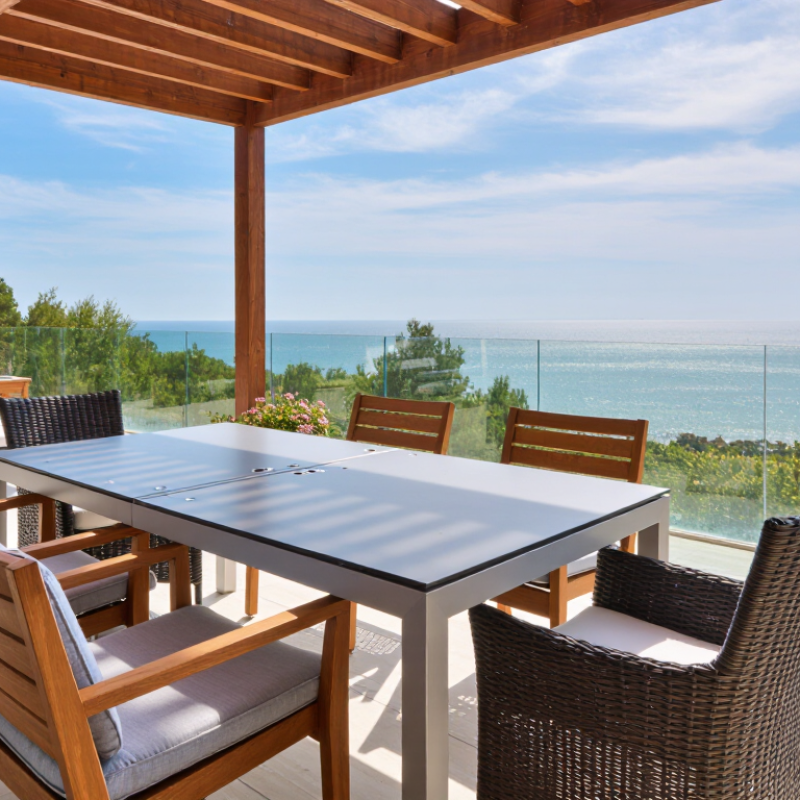
A suitable outdoor furniture material must resist water, sunlight, heat, corrosion, and repeated movement. Climate matters more than appearance. NOAA’s 1991–2020 climate normals show Miami receives about 62 inches of annual rain, while Phoenix receives roughly 8 inches. The same chair faces completely different risks in these locations. Water changes everything. In humid areas, powder-coated aluminum and stainless steel resist rust better than untreated steel. Recycled polymer also handles moisture well, but it may expand under strong heat.
Wood can perform beautifully, but it needs careful detailing. The USDA Forest Products Laboratory’s Wood Handbook, FPL-GTR-282, notes that wood-decay fungi generally need moisture contents above 20 percent. Slatted designs, raised feet, and breathable covers help wood dry faster. Hardwood can feel warm and natural, yet direct sunlight gradually changes its color. A coating may slow that process, not stop it. I would not choose any material by showroom appearance alone. Small details matter. Check fasteners, drainage, weld quality, and replacement options. ASTM weathering methods, including ASTM G154, help evaluate UV exposure, but laboratory cycles cannot perfectly reproduce every backyard. That limitation deserves honesty. The best material is the one matched to local weather, maintenance habits, and expected service life.
Outdoor patio furniture must handle sunlight, rain, humidity, and sudden temperature changes. The best material depends on your climate, maintenance habits, and preferred comfort.
Wood brings natural warmth to a patio. Dense hardwoods usually resist moisture better than softwoods. Still, every wooden surface needs attention. Direct sunlight can fade the grain, while trapped water may cause swelling or cracking. A protective finish helps, but it will eventually need renewal. I have learned that a beautiful wooden chair can become uncomfortable when neglected. Check the legs and joints, especially after wet seasons.
Metal offers strength and a clean appearance. Aluminum is light and usually resists rust, making it practical for balconies and windy areas. Steel feels heavier and sturdier, but exposed scratches can invite corrosion. Inspect welded joints and drainage holes.
Plastic furniture is easy to move and wash with mild soap. It can handle rain well, yet poor-quality plastic may fade, warp, or become brittle under intense sun. Lightweight pieces may also slide across hard patios.
Wicker is a weaving style, not a single material. Natural wicker looks inviting but needs protection from prolonged moisture. Synthetic wicker generally performs better outdoors, especially over a rust-resistant frame. Dust can collect between the strands, so a soft brush helps.
No material wins everywhere. My earlier assumption that low maintenance meant no maintenance was wrong. Shade, airflow, furniture covers, and seasonal inspections often matter as much as the material itself.
Outdoor furniture faces three persistent threats: rain, trapped moisture, and ultraviolet light. Material choice should match the exposure, not only the style.
Aluminum performs well in wet climates because it does not rust like ordinary steel. Powder-coated surfaces add protection, but scratches can expose the metal underneath. Stainless steel resists corrosion better, though coastal air may still leave salt marks. Wipe those areas regularly.
Teak handles sunlight and rain effectively because its natural oils slow moisture absorption. It can turn silver over time, and that change is not damage. Leaving it untreated reduces upkeep, but the surface may feel drier and rougher. I once assumed all wood needed frequent sealing; that was poor advice. Over-sealing can trap moisture and create peeling patches. Inspect joints, end grain, and feet after wet seasons.
High-density polyethylene resists water, fading, and cracking, making it useful beside pools or uncovered decks. It feels less warm and traditional than wood. Wrought iron offers stability in windy areas, yet chipped paint can invite rust quickly.
Cushions need separate attention. Quick-drying foam, breathable covers, and raised storage prevent mildew better than thick plastic wrapping. Furniture should also drain easily. A small tilt helps.
No material is maintenance-free, especially beneath dense trees where leaves keep surfaces damp.
Choosing outdoor patio furniture is often a maintenance decision disguised as a style decision. Aluminum resists rust and usually needs only washing, although salty air can still stain its finish. Steel is stronger, but scratches may expose metal and invite corrosion. Wood feels warmer, yet it demands regular cleaning, sealing, and closer inspection.
The USDA Forest Products Laboratory’s Wood Handbook notes that decay fungi generally need wood moisture above 20 percent. That makes trapped water under cushions, joints, and feet a serious concern. In my experience, neglected wood can look tired within one wet season. Properly maintained hardwood may last 10 to 20 years, depending on climate and construction. As a useful comparison, the National Association of Home Builders’ 2023 life-expectancy study estimates about 15 to 20 years for wood decking and 25 to 30 years for composite decking. Furniture may perform differently, but the moisture lesson still applies. Plastic and recycled-resin furniture will not rust, though sunlight can cause fading or brittleness over time.
Tips: Check drainage after rain. Lift cushions weekly. Tighten loose fasteners before winter. Use breathable covers, not sealed plastic. A 2024 report from the International Casual Furnishings Association identified durability and easy care as major consumer priorities, but convenience can encourage unrealistic expectations. No material is maintenance-free. I have also learned that shade helps more than expensive polish. Coastal homes may need monthly rinsing, while dry inland patios can tolerate longer intervals.
Maintenance needs and lifespan vary by material. The chart compares typical service life with estimated routine maintenance time for residential outdoor use.
Key takeaway: Teak, aluminum, and HDPE/resin furniture generally offer the longest service life. HDPE/resin requires the least routine care, while teak needs periodic cleaning and oiling to preserve its original color. Steel and synthetic wicker can be durable but usually require more frequent inspection and cleaning.
Choosing patio furniture starts with exposure, not appearance. A shaded balcony needs different materials from a coastal deck. Check sunlight, rainfall, humidity, wind, and winter freezing before comparing finishes. NOAA climate normals provide 30-year local records for temperature and precipitation. These records can reveal whether your furniture faces constant moisture or intense seasonal drying. It is practical data, not a decoration decision.
For strong sun, powder-coated aluminum is usually a sensible choice. It resists rust and remains relatively light during seasonal rearrangement. However, poor coatings may fade or scratch, especially under repeated ultraviolet exposure. NOAA’s UV Index classifies levels from 3 to 5 as moderate, when protection becomes important. That same exposure can weaken fabric, plastics, and surface finishes.
I once chose dark cushions for a sunny terrace. They became uncomfortably hot. That shortcut was wrong.
Wood suits covered patios and homeowners willing to maintain it. The USDA Forest Products Laboratory’s Wood Handbook explains that outdoor wood repeatedly gains and loses moisture. This movement can cause swelling, shrinking, surface checking, and loose joints. Use raised feet and allow air beneath the frame.
In wet regions, synthetic wicker or recycled plastic can reduce moisture-related maintenance. Yet these materials are not maintenance-free. Inspect fasteners, drainage holes, and hidden joints each season. Freeze-thaw climates need special care, because trapped water can expand inside cracks and damage frames. Salt-air locations also require regular rinsing, even with corrosion-resistant materials.
It should resist rain, sunlight, heat, corrosion, and repeated movement. Climate matters more than appearance. Drainage and construction quality matter too.
Powder-coated aluminum, stainless steel, and recycled polymer handle moisture well. Untreated steel can rust quickly. Scratches may still expose metal beneath protective coatings.
Wood offers a warm, natural appearance and can last for years. Raised feet and slatted surfaces help it dry after rain. Neglected wood may deteriorate within one wet season.
Inspect joints, feet, and end grain after rainy periods. Keep cushions from trapping water against the wood. Sealing can help, but excessive sealing may cause peeling.
Ultraviolet light can fade wood, plastic, fabric, and painted surfaces. Teak may gradually turn silver without becoming structurally damaged. A coating slows color changes but cannot stop them.
High-density polyethylene resists water, fading, and cracking. It needs less rust-related care than metal. However, it may feel less warm than wood.
Wrought iron provides useful stability during strong winds. Chipped paint can expose metal and encourage rust. Check the finish often. Small damage matters.
Choose quick-drying foam and breathable covers. Store cushions above the ground. Avoid tightly sealed plastic wrapping, which can trap moisture.
Well-maintained hardwood may last roughly 10 to 20 years. Composite-style materials may last longer in some settings. Actual life depends on climate, construction, and care.
No material is completely maintenance-free. Rinse coastal furniture regularly and check drainage after rain. I once trusted expensive polish too much. Shade helped more.
Choosing what is the best material for outdoor patio furniture depends on your climate, patio environment, design preferences, and willingness to perform maintenance. A suitable material should withstand rain, humidity, strong sunlight, temperature changes, and regular use without losing its strength or appearance. Wood offers warmth and natural beauty but may require sealing and regular care. Metal provides durability and stability, although it may need protection against rust and heat. Plastic is lightweight, affordable, and easy to clean, while wicker can create a comfortable, relaxed look but performs best when made with weather-resistant materials.
Weather exposure and maintenance needs also affect the furniture’s lifespan. Materials that resist moisture, fading, and cracking generally remain attractive for longer, while regular cleaning, protective covers, and seasonal storage can improve durability. To make the right choice, consider your local weather, available storage, expected usage, comfort needs, and budget. The best option is the material that balances long-term performance, maintenance requirements, appearance, and suitability for your specific outdoor space.

Hark Homes