Floating nightstands make a bedroom feel lighter without asking for more floor space. Their clean line can open up a narrow walkway, while the exposed floor is easier to vacuum. A phone, reading glasses, and a small lamp still have a place. That mix of usefulness and visual calm helps explain why are floating nightstands getting so popular among homeowners and designers.
Industrial designer George Nelson wrote, “Design is a response to social change.” He was not discussing floating nightstands specifically, but the idea offers useful context: smaller homes and changing routines have encouraged furniture that feels compact and flexible. A wall-mounted bedside shelf can be set at a comfortable height, paired with a low bed, or fitted with a discreet drawer. Small details matter.
There is a practical side, too. The unit must suit the wall and hold its intended load; secure installation is not a styling extra. Chinese manufacturers offer a range of finishes, sizes, and storage options, but product quality can vary. Check the material, mounting hardware, stated load capacity, and installation guidance before buying. A beautiful finish cannot fix a weak bracket. And floating storage is not perfect: renters may avoid drilling, and some designs leave little room for bulky items. Its popularity makes sense, though it is not a fit for every bedroom.
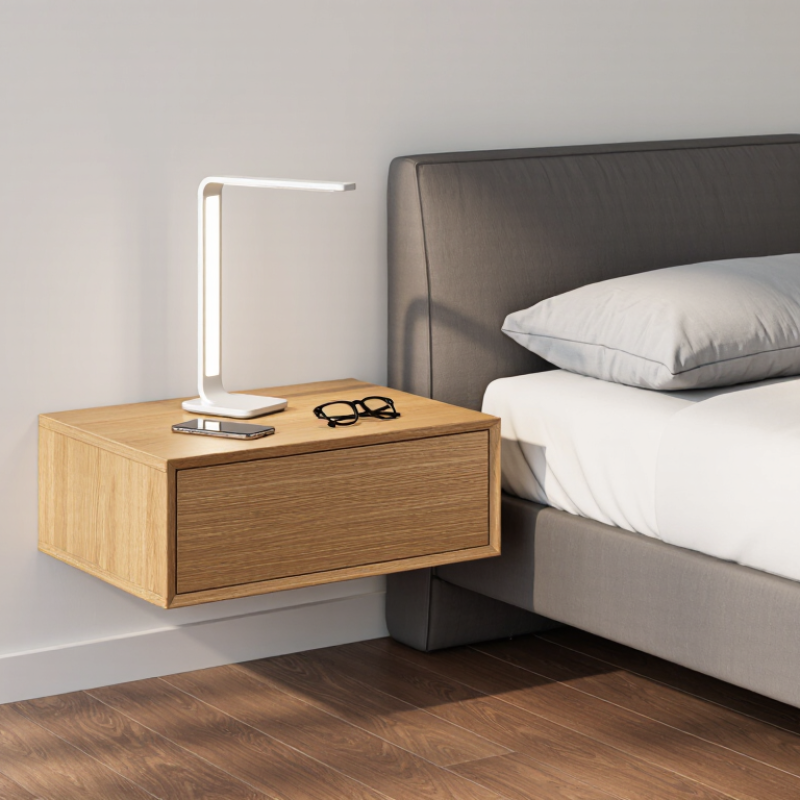
A floating nightstand is a bedside shelf or compact cabinet fixed to the wall, with no legs touching the floor. Its wall-mounted design creates a clear strip of floor beneath it, making small bedrooms feel less crowded and easier to clean. It may include a drawer, an open cubby, or just a flat surface for a book and reading glasses. The wall and fasteners carry the load, so mounting matters. A hollow-sounding wall is not a safe guess.
Houzz’s 2024 U.S. Houzz & Home Study reports median renovation spending of $24,000 in 2023. That figure covers many home projects, not floating nightstands specifically, but it shows homeowners invest in practical upgrades. A floating design can make a compact room feel calmer. Still, it is not automatically more functional: limited depth can leave a phone perched near the edge, and poor placement can make nighttime access awkward. Measure from the mattress and check the drawer’s clearance before choosing one.
Tips: Locate wall studs where possible, confirm the hardware’s load rating, and keep the top within easy reach from bed. Test the height with masking tape before drilling. Small detail, big difference. If you rent or cannot verify the wall structure, a freestanding option may be the more dependable choice.
China’s floating nightstands begin with a practical design question: what must stay within reach beside the bed? Designers often sketch compact forms with a shallow drawer, an open shelf, or both. The wall-mounted shape frees floor space and makes cleaning easier. It also places more responsibility on the fixing system. A clean look matters, but so does dependable support.
In many Chinese workshops, production starts with material selection and measured drawings. Boards may be cut on CNC equipment, then checked for size before workers assemble the cabinet. Drawer runners, back panels, and mounting brackets need careful alignment. A few millimeters can affect how smoothly a drawer closes. Edges are sanded, sealed, and finished to resist everyday scuffs. The surface should feel smooth beneath a hand, not just look polished in a photograph.
Mounting strength is tested against the intended wall structure, since a nightstand cannot rely on appearance alone. Hardware and installation guidance matter, too. Small details count. Before packing, workers may inspect the finish, drawer movement, and bracket fit. Still, a prototype can look elegant and feel awkward when its drawer is too shallow for a phone charger. That is a useful reminder: compact furniture involves compromises, and some designs need another round of testing.
The best floating nightstands pair a compact shape with dependable construction. Look for a stated weight limit and mounting hardware suited to your wall type. A drawer should slide smoothly, even when holding a phone charger, reading glasses, and a paperback. Small details matter. Rounded front edges feel gentler in a narrow bedroom, while a recessed handle avoids snagging sleeves.
Useful storage is more than a deep drawer. A small open shelf keeps a book within reach, and a cable opening can prevent cords from drooping across the bedside. Check the finish, too. It should wipe clean with a soft cloth and resist marks from a water glass, though no surface is completely stain-proof. A matte finish may hide fingerprints better than a glossy one.
Installation separates attractive furniture from practical furniture. Confirm stud locations, wall material, and the maker’s instructions before mounting; not every wall can support the same load. Measure from mattress height, then leave room for lamps and bedside switches. Floating units can make floor cleaning easier, but they offer less flexibility once fixed in place. That trade-off matters. It is easy to choose the prettiest shape and overlook daily reach.
Why Are Floating Nightstands So Popular in China?
Floating nightstands suit bedrooms where every visible surface matters. China’s Seventh National Population Census reported average urban housing floor area of 36.52 square metres per person in 2020. That figure does not describe every home, but it helps explain why compact, flexible furniture appeals to many urban residents. A wall-mounted bedside shelf leaves the floor open, making a narrow room feel less crowded and easier to sweep beneath. Small change. Noticeable effect.
Their appeal is also practical. A drawer can hold a phone, glasses, and charging cable, while the clear space below accommodates slippers or a robot vacuum. The National Bureau of Statistics reported that China’s urbanisation rate reached 66.16% in 2023, reflecting the large share of people living in towns and cities. In these homes, clean lines and usable storage can matter as much as decoration. Yet floating furniture is not automatically space-saving: poor installation, weak wall support, or a shelf set too high can make daily use awkward. Measure the bed, wall, and reach before choosing one. A little planning helps.
| Popularity Factor | How Floating Nightstands Work | Why They Appeal to Buyers | Practical Consideration |
|---|---|---|---|
| More visible floor space | The cabinet is fixed to the wall rather than resting on legs or a base. | An open area beneath the nightstand can make a bedroom feel less crowded, especially where floor space is limited. | Check that the wall and fixing method can safely support the cabinet and its contents. |
| Easier floor cleaning | The raised design leaves the floor below accessible. | A vacuum, mop, or robot vacuum can usually pass underneath more easily than beneath a floor-standing unit. | Choose a mounting height that leaves enough clearance for the cleaning tools used at home. |
| A clean, modern look | Wall mounting conceals legs and can create a simple, streamlined silhouette. | This style pairs well with contemporary bedrooms and uncluttered interiors. | Match the finish and proportions to the bed, wall colour, and other furniture. |
| Flexible placement | The installer can position the unit at a chosen height and distance from the bed. | Custom placement can suit different bed heights and personal routines. | Measure mattress height and check that drawers or doors can open without obstruction. |
| Useful bedside storage | Depending on the design, a floating unit may include a drawer, shelf, or enclosed compartment. | It keeps everyday items such as a phone, book, or glasses within reach while limiting visible clutter. | Compare internal storage dimensions with the items you plan to keep there. |
| Options for compact rooms | Wall-mounted models are available in compact widths and shallow depths. | A smaller bedside surface can provide basic storage without occupying as much floor area as a larger table. | Confirm the usable surface area and depth; compact designs may not fit bulky lamps or large items. |
| Installation and wall compatibility | The unit relies on wall fixings rather than standing independently. | Once securely installed, it keeps the bedside area visually light and leaves the floor clear. | Wall construction, anchors, load limits, and installation quality matter. Follow the product instructions or consult a qualified installer. |
Floating nightstands are popular because they free up floor space and make a bedroom feel less crowded. Choosing one takes more than matching its finish to your bed. Measure the wall area, mattress height, and items you plan to store. A shelf may suit a phone and book; a drawer is better for glasses or charging cables. Check the listed load capacity, too. Small-looking furniture still needs secure support.
Aim to place the top near mattress height, or a little above it, so items remain easy to reach. Measure twice. Then check the wall material and locate the studs before drilling. Keep the nightstand clear of switches, outlets, and visible cables. A level helps prevent a shelf from tilting, even when the wall looks straight. It can be surprisingly tricky.
Use the mounting hardware specified for the wall and product. For a stud wall, fasten into studs where the instructions require it; drywall anchors alone may not support a loaded cabinet. For masonry, use anchors rated for that surface. Check for hidden wires or pipes before making holes, and ask a qualified installer if you are unsure. After mounting, apply gentle pressure and test the unit with light items before adding heavier belongings. Recheck the fasteners later; walls and hardware can shift slightly over time.
It is a bedside shelf or compact cabinet attached to the wall, with no legs on the floor. It may have a drawer, an open cubby, or a simple flat top.
It leaves a clear strip of floor beneath it, which can make a narrow room feel less crowded. Sweeping or vacuuming underneath is easier. The room may still feel tight.
A shallow shelf can hold a phone, book, or reading glasses. A drawer offers room for small items and charging cables. Check the depth so belongings do not sit near the edge.
Keep the top near mattress height, or slightly above it, for easy reach. Try marking the proposed height with masking tape before drilling. A few centimetres can matter at night.
Measure the wall space, mattress height, and items you plan to keep nearby. Check the drawer’s clearance and listed load capacity. Do not choose by appearance alone.
Find wall studs where possible, and confirm the wall material and required hardware. Check for hidden wires or pipes first. If the structure is unclear, ask a qualified installer.
Not always. Follow the product instructions and use hardware rated for your wall surface. Some cabinets need fasteners secured into studs; an anchor alone may not be enough.
Use a level to check for tilting, then apply gentle pressure. Start with light items and recheck the fasteners later. Walls and hardware can shift slightly.
It may not be the best choice if drilling is restricted or the wall structure cannot be verified. A freestanding nightstand can be more dependable, even if it takes up floor space.
Floating nightstands are wall-mounted bedside tables that free up floor space while creating a clean, modern look. China’s designs combine practical layouts with careful material selection and efficient manufacturing, offering options for different room sizes and décor styles. The best models balance sturdy construction with useful features such as drawers, shelves, smooth edges, and surfaces that are easy to maintain.
Why are floating nightstands getting so popular? They make small bedrooms feel more open, simplify floor cleaning, and keep everyday essentials within reach without the bulk of traditional furniture. Choosing the right nightstand means considering its dimensions, storage needs, wall type, and the weight it must support. Proper installation is equally important: secure the mounting hardware into suitable structural support, follow the product instructions, and check that the table is level and firmly attached before use.

Hark Homes