2026 Best Ways to Stop a Bed Frame from Squeaking?

Time:2026-11-03 Author:Liam
0%

A squeaky bed frame can turn a quiet room into a nightly soundtrack: a groan at every turn, a sharp click near the headboard, or a soft creak beneath the mattress. The noise often comes from ordinary movement between loose joints, slats, fasteners, or floor contact. Finding the exact source matters. Tightening every bolt at random may quiet one corner while leaving the real problem untouched.

The stakes are practical, not dramatic. The CDC’s 2014 report on short sleep found that about 35% of U.S. adults reported sleeping fewer than seven hours per night. That report does not measure noise from bed frames, so it cannot prove that a squeak causes poor sleep. Still, it highlights why a stable, quiet bedroom matters. Sleep scientist Dr. Matthew Walker has described sleep as “the single most effective thing we can do to reset our brain and body health each day.” That is a useful reminder, though not a bed-repair instruction.

This guide to how to stop a bed frame from squeaking starts with simple checks: press each slat, test the frame against the wall, and listen for the loudest joint. A coin-sized felt pad, a correctly tightened fastener, or a small furniture wax application may help, depending on the frame material. Don’t over-tighten. A little restraint matters. The right fix should stop the noise without damaging the finish or weakening the structure.
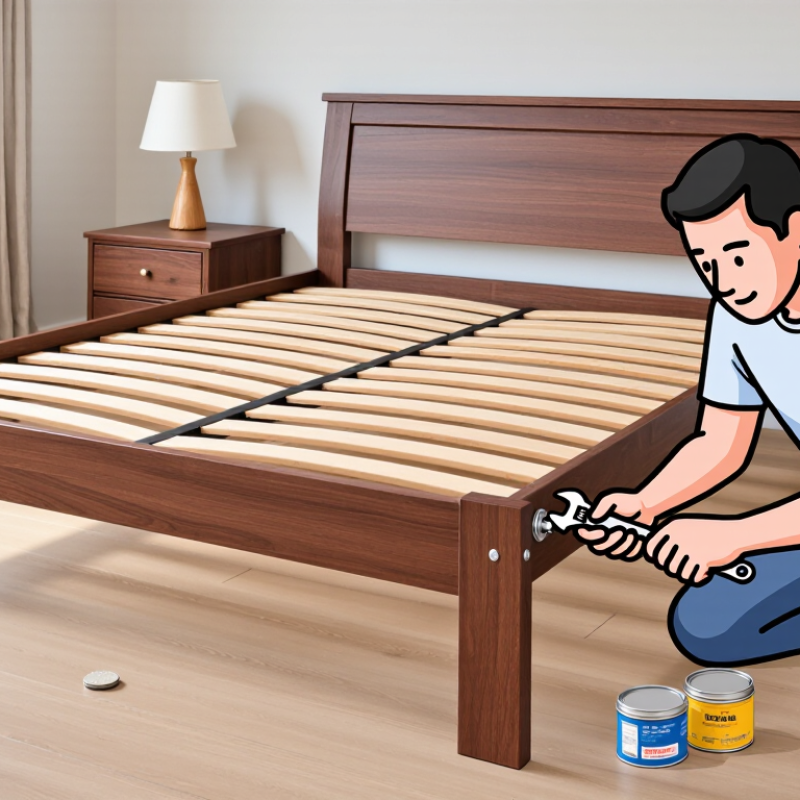
2026 Best Ways to Stop a Bed Frame from Squeaking?

Identify the Source of the Bed Frame Squeak

A squeak is a clue, not a diagnosis.

Remove the mattress and press each corner of the frame, then rock the headboard gently. Listen near the joints, center support, and slats. A helper can repeat the test while you place a hand beside each connection. Feel for movement. Check whether a slat shifts, a bolt turns, or the floorboard creaks under one leg. The sound may travel through the frame, so the loudest spot is not always the source.

Wood can change with indoor humidity. The U.S. Forest Products Laboratory’s Wood Handbook (FPL-GTR-282) lists equilibrium moisture content near 6% at 30% relative humidity and about 9% at 50%, at 70°F. That change may affect how wooden joints fit.

Metal-on-metal squeaks often point to loose hardware or rubbing brackets; wood-on-wood noises may come from slats or a shifting joint. Check for polished rub marks, dust trails, and uneven gaps. A quick guess can miss the real culprit.

I’ve seen a floor contact blamed on a frame joint—so test each point separately before tightening anything.

Tighten Loose Bolts, Screws, and Frame Joints

A squeak often begins where two frame parts rub, but loose hardware is a common place to check. Sit on the mattress edge and listen for the sound, then gently rock the frame to locate the moving joint. Check every accessible bolt and screw, including the center rail and leg brackets. A small wobble is easy to miss.

Use the correct screwdriver or wrench, and tighten each fastener until snug. Do not force it. NASA’s Fastener Design Manual, RP-1228, explains that friction affects the relationship between tightening torque and bolt preload. In practice, that means a universal torque setting is not reliable for every bed frame; follow the maker’s instructions when available. Tighten opposite sides in turn, so one corner does not pull the frame out of alignment.

If a bolt turns without gripping, stop and inspect the hole and hardware. A washer may be missing, or the screw may be worn. Don’t just crank harder. Re-seat the joint, align the holes, then tighten again. Retest by gently rocking the frame. I sometimes miss the center support on the first check; it can shift under weight and keep the noise going.

2026 Best Ways to Stop a Bed Frame from Squeaking? - Tighten Loose Bolts, Screws, and Frame Joints

What to Check How to Fix It Useful Items When to Recheck Important Note
Loose bolts and nuts at the headboard, footboard, and side rails Remove the mattress if needed, hold the joint in alignment, and tighten each fastener with the correct tool. Matching wrench, hex key, or screwdriver After tightening, gently press or rock the frame to check for movement. Tighten securely, but do not force a fastener or strip its threads.
Screws in wooden rails, slats, or support brackets Tighten loose screws carefully. If a screw spins without gripping, stop and repair the damaged hole before reusing it. Correct screwdriver; suitable wood repair materials if needed Test the repaired area before replacing bedding. Avoid driving a larger screw into a weakened area unless the repair method allows it.
Frame joints that shift or rub when the bed moves Realign the parts, then tighten the joint. Where compatible, add a thin washer to reduce direct contact between metal parts. Wrench or hex key; correctly sized washer Repeat the same gentle movement that produced the squeak. Do not add a washer if it prevents the joint from fitting or locking correctly.
Metal parts rubbing after the fasteners are secure Apply a small amount of lubricant suitable for the frame material at the contact point, following the product directions. Material-compatible lubricant; cloth Test the joint and wipe away excess lubricant. Keep lubricant off bedding and finished surfaces unless it is confirmed safe for them.
Slats or support rails moving against the frame Reseat the slats evenly. Add thin felt or another suitable non-slip padding at contact points if the frame design permits it. Felt pads or compatible non-slip padding Check that every slat rests securely in its intended position. Do not block support fittings or alter the frame’s required spacing.
Uneven floor or a rocking bed frame Move the bed slightly to a level area or use a stable furniture shim beneath the uneven leg. Level; suitable furniture shim Press each corner to confirm the frame no longer rocks. Use a firm, stable shim that cannot slide out during normal use.

Lubricate Noisy Contact Points with Suitable Materials

A squeak often comes from two surfaces rubbing, not from the whole bed frame. Remove the mattress and press gently on each corner, then listen for the sound. Check metal brackets, wooden slats, and the points where rails meet the headboard. Dust and old residue can hide the exact contact spot, so wipe it clean and let it dry before applying anything.

Tips: Use a small amount of silicone lubricant on metal joints, or a thin layer of furniture wax where finished wood rubs against wood. Test a hidden area first. Keep lubricant away from the mattress, bedding, and floor. Too much can collect dust or leave a slippery mess.

Work the joint by moving the frame slightly, then wipe away any excess. A cotton swab helps reach narrow gaps without coating nearby surfaces. Avoid spraying every connection at once; that makes it harder to find the cause if the noise remains. Some squeaks return after a few nights, especially if the bolts are loose or the frame shifts on an uneven floor. Lubrication can help, but it is not always the whole fix.

Add Padding Between Rubbing Parts and the Floor

A bed frame may squeak where a leg rubs the floor, or where two frame parts shift against each other. Press each corner gently and listen before adding padding. A helper can rock the bed while you check the joints. Small movements matter.

Place a thin felt pad beneath a leg that scrapes a hard floor. On smooth surfaces, a firm rubber pad may grip better and reduce movement. If a crossbar or frame joint rubs against the floor, add a small piece of dense felt at the contact point. Cut it to fit; loose edges can bunch up and create a new wobble. Keep the bed level.

For rubbing joints above the floor, a thin fabric or felt strip can cushion contact between surfaces. Avoid thick foam. It compresses unevenly, and the frame may feel less stable. Check that each leg still sits flat, then test the bed with a few gentle shifts. Some squeaks come from loose fasteners, not friction. Padding will not fix those. I once overlooked a slightly uneven leg; the noise returned until I repositioned the pad. Recheck the fit after a few nights.

2026 Guide: Stop a Bed Frame from Squeaking with Padding

Example padding points for a frame with four corner legs and six slats. Counts vary by bed design; check your frame and pad only surfaces that rub.

Quick tip: Add felt or rubber pads beneath feet that squeak against the floor. For rubbing wood or metal parts, first tighten the fasteners, then add a thin pad at the contact point if the squeak remains. Keep pads clear of fasteners and make sure the frame stays stable.

Check Mattress Support and Replace Worn Components

Before blaming the frame, lift the mattress and inspect the support beneath it. Press each slat near its center; a cracked, bowed, or loose slat can flex and rub against its bracket. Small gaps matter. Check that slats sit evenly and that the center rail rests firmly on the floor, if the frame is designed to have one. A raised rail may shift under weight, while an uneven foot can make the frame rock. Gently test each corner for movement. Listen after each change.

Inspect joints where metal meets metal or wood meets wood. Worn plastic caps, split supports, bent brackets, and flattened felt pads can all create noise. Replace damaged parts with components sized for the frame, rather than wedging in cardboard or loose fabric. A fresh felt pad may quiet light contact, but it will not fix a cracked slat. Tighten accessible bolts evenly, following the assembly guidance; forcing a stripped fastener can weaken the joint. If the supports look sound, check whether the mattress is shifting against the headboard. That source is easy to miss. I have misread it before.

FAQS

How can I find the source of a bed frame squeak?

Remove the mattress and press each corner. Listen near the joints, center support, and slats. A squeak is a clue, not a diagnosis.

Should someone help me test the frame?

Yes. Ask a helper to rock the frame while you feel beside each connection. Listen closely. The loudest spot may not be the source.

What signs can reveal a loose or rubbing part?

Look for shifting slats, turning bolts, polished rub marks, dust trails, and uneven gaps. Check whether a floorboard creaks under a leg, too.

Why might a wooden bed frame start squeaking?

Indoor humidity can change how wooden joints fit. Even a small shift may cause rubbing. I might blame the wrong joint at first, so test each point separately.

What can I use on noisy contact points?

Use a small amount of silicone lubricant on metal joints. For finished wood rubbing against wood, try a thin layer of furniture wax.

How should I apply lubricant without making a mess?

Wipe the contact point clean and let it dry. A cotton swab can reach a narrow gap. Move the frame slightly, then wipe away excess.

What should I keep lubricant away from?

Keep it off the mattress, bedding, and floor. Test a hidden spot first. Too much lubricant can collect dust or leave a slippery patch.

What if the squeak returns after lubrication?

Check for loose bolts or a frame shifting on an uneven floor. Lubrication may help, but it may not fix the underlying movement.

Conclusion

A squeaky bed frame can disrupt sleep, but the noise often comes from a few fixable issues. Start by identifying where the sound occurs: gently press different areas of the bed and listen for squeaks around the joints, slats, mattress supports, and points where the frame meets the floor. Once you locate the source, tighten loose bolts and screws, and check that the frame connections are secure without overtightening them.

To learn how to stop a bed frame from squeaking, reduce friction where parts rub together by applying a suitable lubricant or adding soft padding between contacting surfaces. Floor protectors can also help prevent noise caused by the frame shifting. Finally, inspect the mattress support and other components for wear, cracks, or sagging. Replacing damaged parts and keeping the frame evenly supported can help restore stability and keep the bed quieter over time.

Liam

Liam

Liam is a dedicated marketing professional with a profound expertise in the industry, where he excels at highlighting the unique advantages of our core products. With a keen understanding of market trends and consumer needs, Liam frequently updates our company’s professional blog, providing......