A China top entryway console table can do more than fill an empty wall. It can create a practical landing zone for keys, mail, shoes, and daily essentials. The challenge is making that zone feel intentional, not crowded. This guide explains how to style an entryway console table with proportion, storage, lighting, and texture in mind.
China remains a major force in global furniture manufacturing. CSIL’s World Furniture Outlook 2024 identifies China as one of the world’s leading furniture producers and exporters. That scale offers buyers many finishes, sizes, and construction choices. However, variety can make selection confusing. Check the table’s dimensions, material composition, load capacity, and hardware quality before focusing on appearance. Houzz’s 2024 U.S. Houzz & Home Study also shows that homeowners continue investing in functional improvements during renovation projects. An entryway console should therefore support real routines, not only photographs.
Start with the wall and walking clearance. A slim console usually works better in a narrow foyer. Add one mirror, a warm lamp, and a shallow tray for small items. Keep decorative objects varied in height. Leave some empty space. It matters.
The IKEA Life at Home Report has repeatedly emphasized the importance of comfort, belonging, and personal expression at home. That insight applies here. Use a ceramic vase, woven basket, framed print, or locally inspired object to show character. Still, perfect symmetry is not essential. Some arrangements will look slightly unfinished at first. Live with them for a few days, then remove what interrupts movement or creates visual noise.
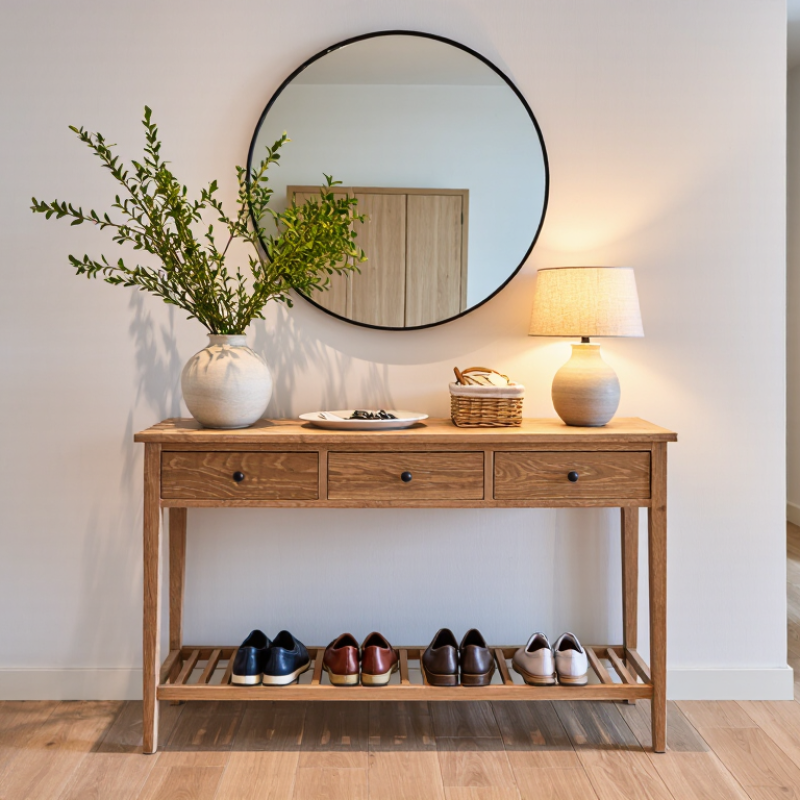
A China entryway console table stands out through balance, material, and quiet craftsmanship. Many designs combine clean lines with traditional details, such as tapered legs, carved edges, or hand-applied lacquer. These features add character without making the hallway feel crowded. A slim profile also matters. It should leave enough walking space for bags, shoes, and daily movement.
Look closely at the construction. Stable joints, even drawer gaps, and a smooth tabletop usually reveal better workmanship. Natural wood may show small variations in grain and color. That is not always a defect. In fact, these differences can make each table feel less ordinary. I once chose a console with beautiful dark finishing, but its shallow drawers proved inconvenient. It looked refined, yet stored almost nothing.
Function should guide the styling. Place a round mirror above the table to soften strong rectangular lines. Add a ceramic bowl for keys, a small lamp for warm evening light, and one narrow vase. Keep the surface partly empty. Too many objects hide the craftsmanship. Check the table height against the mirror and your entryway lighting. A polished finish can reflect harsh light, which may feel colder than expected. Measure carefully. Even an attractive table can disappoint when doors open into it or its depth blocks circulation.
Choosing the right console table for your entryway starts with accurate measurements. Measure the wall, doorway, and walking path before shopping. Leave at least 90 centimeters for comfortable movement. A narrow table usually works better in a compact hall. Measure twice.
Height matters too. A console around 75 to 85 centimeters usually feels comfortable beside the entrance. Its surface should not block switches, vents, or door handles. Check the table’s depth carefully, especially in apartments with tight corridors. A slim drawer can hold keys, mail, and small daily items without creating visual clutter.
Material should match your household habits. Solid wood offers warmth, while metal and glass can make a dark entryway feel lighter. If children or pets use the space, choose rounded corners and stable construction. Wall anchoring is sensible when the table is tall or heavily decorated. I once selected a beautiful table with insufficient storage, and the hallway quickly became untidy. That mistake still influences my recommendations. Look for balanced proportions, smooth edges, and drawers that open quietly. Decorative details are useful only when the table remains practical. A lamp, shallow bowl, and one framed photograph may be enough. Too many objects reduce the entryway’s function. Personal taste matters, but daily movement matters more.
| Selection Dimension | Recommended Measurement or Option | Why It Matters | Styling Guidance |
|---|---|---|---|
| Console Width | Choose a table that is approximately 60%–80% of the available wall width. | This creates visual balance without making the entryway feel crowded. | Center the table on the wall or align it with the doorway, mirror, or architectural feature. |
| Console Depth | Select 25–35 cm for narrow halls; 35–45 cm for a more spacious entryway. | A shallow profile preserves walking space while still providing a useful surface. | Keep decorative objects toward the rear and avoid projecting items into the circulation path. |
| Console Height | A height of 75–90 cm works well for most entryways. | This range is comfortable for placing keys, bags, mail, and everyday accessories. | Hang artwork or a mirror with its center close to eye level, generally about 145–155 cm from the floor. |
| Walking Clearance | Allow at least 90 cm of clear passage in frequently used areas. | Adequate clearance improves movement and reduces the chance of bumping into furniture. | Measure with doors, drawers, baskets, and nearby furniture fully open. |
| Storage Type | Use drawers for small items, open shelves for baskets, and cabinets for concealed storage. | The right storage format keeps high-use entryway items organized and accessible. | Place a tray in the top drawer or on the surface for keys, cards, and other small essentials. |
| Material Selection | Wood adds warmth, metal creates a lighter profile, and engineered panels offer consistent finishes. | Material affects durability, weight, maintenance, and the visual character of the entryway. | Use natural textures for a welcoming look and smooth, sealed surfaces for easier cleaning. |
| Color and Finish | Coordinate the finish with the floor, door, wall color, or nearby furniture. | A related color palette makes the entryway appear intentional and cohesive. | Combine no more than three dominant finishes to prevent visual clutter. |
| Mirror or Artwork | Choose a piece around two-thirds to three-quarters of the console width. | The proportion keeps the wall arrangement balanced above the furniture. | Leave approximately 15–25 cm between the tabletop and the bottom of the mirror or artwork. |
| Lighting | Use a table lamp, wall light, or nearby ceiling fixture according to the available electrical points. | Layered lighting improves visibility and adds atmosphere near the entrance. | Keep lamp cables secured against the wall and away from the walking route. |
| Decorative Balance | Combine one tall object, one medium object, and one low object. | Varying heights create a more dynamic and visually stable arrangement. | Try a vase or lamp, framed artwork, and a tray or stack of books while leaving some open surface area. |
| Safety and Stability | Use adjustable feet, anti-tip hardware, and rounded edges where appropriate. | Secure construction is especially important in homes with children, pets, or heavy daily use. | Avoid placing unstable tall objects near the edge and distribute stored items evenly. |
China Top Entryway Console Table: How to Style It?
A well-made entryway console table can set the mood before guests enter. I usually begin with its material, not decoration. Wood creates warmth, while metal gives a sharper, lighter impression. Stone or ceramic surfaces feel durable, but they may appear cold without soft accessories. A woven basket underneath can balance that effect.
Color matching should follow the room’s existing tones. For a pale console, try warm beige, muted green, or soft terracotta. Dark wood works with cream walls and brushed metal details. Keep only two or three main colors. Too many shades can make a narrow entryway feel restless. Small spaces need breathing room.
Interior style also matters. A simple wooden table suits modern, Japandi, or farmhouse settings. A slim metal frame fits industrial rooms, especially with concrete textures and black lighting. For traditional interiors, choose curved edges and natural finishes. I once paired a glossy surface with several shiny objects, and the result looked busy rather than elegant. That mistake taught me to mix textures instead of repeating finishes.
Measure the walkway before styling. Leave enough clearance for coats, bags, and daily movement. A tray can hold keys, while one tall vase adds height without crowding the surface. Use secure, stable accessories in homes with children or pets. The best arrangement is not always the most decorated.
Compare material-and-color combinations by their calculated palette lightness, then match the combination to a suitable interior style.
Light palettes such as oak with warm white visually enlarge narrow entryways and suit Scandinavian interiors. Medium-tone walnut with sage green creates a softer, natural look for Japandi spaces. Dark metal with greige provides contrast in modern interiors, while marble with charcoal creates a dramatic combination for contemporary settings. Palette lightness is calculated from each displayed HEX color using standard sRGB relative luminance.
A well-made entryway console table should make daily routines easier, not create another surface to manage. Start with a shallow tray for keys, cards, and sunglasses. Keep it near the door’s natural reach. A small ceramic bowl can soften the arrangement while hiding visual clutter. Leave part of the tabletop open. This empty space is useful when carrying groceries or sorting mail.
Balance function with decoration by varying height and texture. Place a framed mirror or simple artwork above the table, leaving enough space for comfortable movement. Add one table lamp for gentle evening light, then use a narrow vase with fresh branches or dried stems. A woven basket underneath can hold scarves, umbrellas, or reusable bags. Check that nothing blocks drawers, walking paths, or electrical outlets.
Tips: Group accessories in threes, but do not force the rule. Choose one practical item, one soft element, and one personal object. For example, combine a tray, a small plant, and a travel photograph. Measure the table before buying storage baskets. I once used a basket that looked attractive but made the hallway feel cramped. That mistake taught me to test clearances first. Dust hidden corners weekly, especially around lamps and textured decor. Keep fragile pieces away from busy entrances, where accidental knocks are common.
A China top entryway console table can stay attractive with simple, consistent care. I wipe the surface weekly with a soft, slightly damp microfiber cloth. Water should never sit on the top. Dry it immediately, especially around seams and decorative edges. The U.S. Environmental Protection Agency reports that indoor pollutant concentrations can be two to five times higher than outdoor levels. Dust control matters more than many owners expect.
For daily maintenance, use coasters beneath ceramics, trays beneath keys, and felt pads under display objects. Avoid abrasive powders, alcohol-heavy cleaners, and soaking wet cloths. Test any cleaner on a hidden area first. I once left a metal bowl on a damp surface overnight. A faint ring remained. It was a small mistake, but prevention is cheaper than refinishing.
Refresh the display every few months. Keep one taller object, one practical tray, and some empty space. The American Society of Interior Designers consistently emphasizes function, proportion, and user comfort in residential design guidance. That principle works well here. Replace dusty artificial stems with a small seasonal branch, then reduce clutter before adding anything new. Measure object height carefully. A crowded console feels narrower. Mine still becomes messy during busy weeks, which is a useful reminder that attractive styling must remain easy to maintain. Clean behind the table, too. Dust gathers along the wall and floor line. Inspect joints, handles, and protective pads during each refresh.
Balanced proportions, clean lines, and quiet craftsmanship give it character. Tapered legs, carved edges, or hand-applied lacquer may add traditional detail. A slim profile keeps bags and shoes moving freely.
Leave at least 90 centimeters for comfortable movement. Measure the doorway, wall, and walking path first. Measure twice. A lovely table becomes frustrating when doors strike it.
A height between 75 and 85 centimeters often feels comfortable near an entrance. Check nearby switches, vents, and door handles. The tabletop should not interrupt daily movement.
Look for stable joints, even drawer gaps, smooth edges, and quiet drawer movement. Natural wood may show varied grain and color. Small differences are not always defects.
Choose a slim design that preserves circulation. Shallow drawers can hold keys, mail, and small daily items. Measure carefully, because depth is easy to underestimate.
Solid wood adds warmth. Metal and glass can make a dark hallway feel lighter. Children and pets may need rounded corners and stable construction.
Place a round mirror above it to soften rectangular lines. Add a ceramic bowl, a small lamp, and one narrow vase. Keep part of the surface empty.
Wall anchoring is sensible for tall tables or heavily decorated surfaces. Stability matters more when children or pets use the hallway. I might overlook this when focusing on appearance.
Insufficient storage may leave mail and keys scattered across the hallway. Strongly polished surfaces can reflect harsh light. I once chose an elegant table with shallow drawers, and it stored almost nothing.
A China entryway console table can become both a practical landing spot and a refined focal point in your home. Its appeal often comes from elegant proportions, durable construction, detailed craftsmanship, and a surface that complements many interior styles. When choosing one, consider the entryway’s size, available walking space, storage needs, and the table’s height and shape. A narrow design may suit a compact hall, while drawers or lower shelves can provide useful organization.
Learning how to style an entryway console table begins with creating balance between function and decoration. Coordinate the table’s material and color with your flooring, walls, lighting, and overall design theme. Arrange essentials such as a tray, bowl, or small storage box alongside decorative elements like artwork, a mirror, greenery, books, or a lamp. Vary heights and textures while leaving enough open space to avoid a crowded appearance. Regular dusting, gentle cleaning, and occasional seasonal updates will help maintain the table and keep the display feeling fresh.

Hark Homes