How to Maximize Storage in a Small Wardrobe?

Time:2026-10-05 Author:Mason
0%

A small wardrobe can feel like a daily puzzle. Shirts slide from hangers, shoes gather near the door, and forgotten sweaters occupy valuable shelf space. Learning how to maximize storage in a small wardrobe starts with observing your real habits, not copying a perfect display online.

Julie Morgenstern, a professional organizer and author, explains, “Organizing is not about getting rid of everything you own or trying to become a different person.” That principle matters here. Effective storage should support your morning routine. It should make frequently worn clothes visible and easy to reach. Slim hangers, vertical folding, and adjustable shelf dividers can create space without expensive renovations. A labeled box can also control accessories, belts, and seasonal items.

Small changes matter.

Yet, no storage method works perfectly for everyone. Rolling clothes may save drawer space, but it can make delicate fabrics harder to inspect. Open shelves look convenient, but they may collect dust quickly. I have also found that storing rarely worn items in high compartments can cause people to forget them completely. This guide will examine practical layouts, overlooked corners, and realistic decluttering decisions. It will also question whether every item needs to remain inside the wardrobe. The goal is not a picture-perfect closet. It is a usable system that stays manageable during busy mornings, limited budgets, and changing seasons.
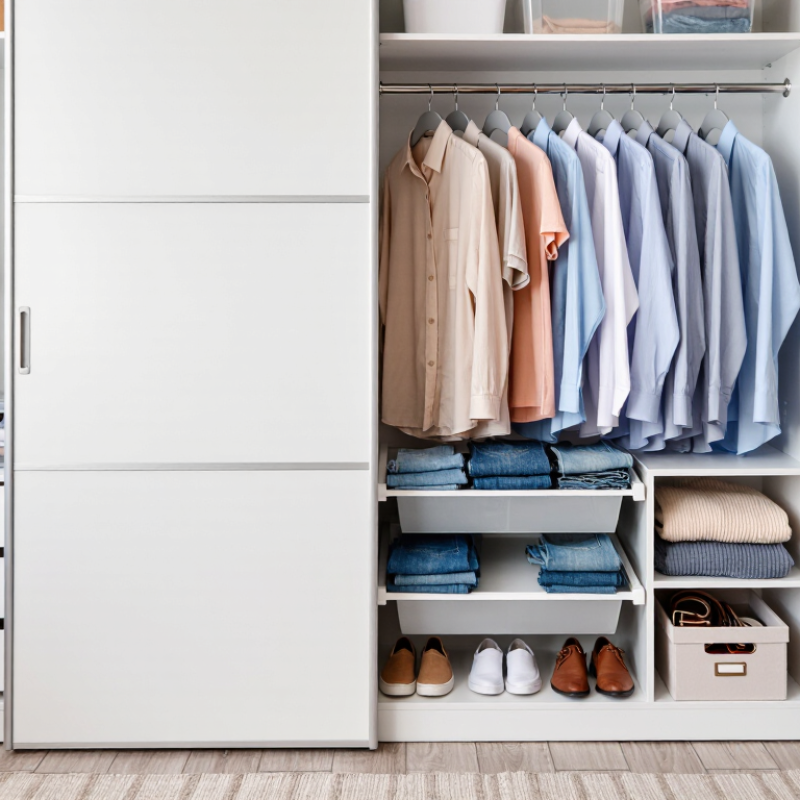
How to Maximize Storage in a Small Wardrobe?

Assess Your Wardrobe Space and Storage Needs

A small wardrobe works best when storage decisions begin with accurate measurements. Measure the interior width, height, and depth, then check the door swing and nearby furniture. A narrow rail may look useful, but folded clothing can block access when shelves are too deep.

I once measured only the back wall and ignored the hinges. The final arrangement felt cramped.

Record what the wardrobe must hold during a normal week. Count hanging shirts, trousers, jackets, shoes, bags, and folded items separately. Note seasonal pieces that can move elsewhere.

Daily clothing deserves the easiest access. Occasional items can use higher shelves or sealed containers. Keep a small gap between stacks, because tightly packed fabric becomes difficult to remove.

Test the wardrobe’s real capacity before buying organizers. Place a measuring tape across the rail and mark each clothing group with removable labels. This reveals whether the rail has enough space for bulky coats.

Check shelf height against folded sweaters, not thin shirts. Leave room for air circulation and future purchases.

A wardrobe filled to its limit is not truly efficient. My first layout looked neat, but it allowed no space for laundry waiting to be stored.

That mistake taught me to assess habits, not just possessions.

Recheck the arrangement after one week. Unused sections often show that the storage plan needs adjustment.

Declutter and Categorize Clothing by Use and Frequency

A small wardrobe works better when clothing is organized by use and frequency, not color alone. Empty every shelf and place garments into work, home, exercise, seasonal, and occasional groups. Keep weekly pieces at eye level. Store rare-event clothing higher or farther back. This simple arrangement reduces searching and protects limited space.

Track what you wear for 30 days. Turn each hanger backward, then return it normally after use. At the end, untouched items deserve careful review. The State of Fashion 2019 reported that garments were worn about 36% fewer times than 15 years earlier. A frequency check challenges that wasteful habit. Keep reliable essentials together, but do not force every item into a rigid category.

Use slim dividers for folded shirts and small boxes for belts, scarves, or clothing repairs. Leave a little empty space, perhaps one hand’s width, so garments remain visible. WRAP’s Valuing Our Clothes report found that extending a garment’s active life by nine months can reduce its carbon, water, and waste footprints by roughly 20–30%. I still keep two rarely worn pieces for sentimental reasons. That is not perfectly efficient. It is honest. Review those exceptions twice a year, especially after seasonal changes, and remove anything uncomfortable, damaged beyond repair, or forgotten.

Use Vertical Space with Shelves, Hooks, and Hanging Solutions

A small wardrobe often feels full because its walls are underused. The National Association of Home Builders’ 2023 report found that 79% of buyers considered garage storage desirable or essential. The message applies indoors too: storage demand is not limited to floor space.

Install one adjustable shelf above the hanging rail. Keep folded sweaters there, but leave a few centimeters for airflow. Add slim hooks to the side panels for belts, scarves, or tomorrow’s outfit.

A second hanging rod can double short-item capacity, especially for shirts and skirts. Measure first. Poor spacing can make clothes hard to reach.

Use the uppermost area for luggage or seasonal boxes. Clear containers help you identify contents without pulling everything down. A vertical shoe rack can replace a crowded floor pile, while door-mounted pockets hold smaller accessories. The 2024 U.S. Houzz & Home Study shows that homeowners continue investing in functional home improvements, yet organization is often treated as an afterthought. That is a mistake. I have found that too many shelves can also create visual clutter. Leave one section intentionally open. It makes daily use faster, and it gives the wardrobe room to change.

Add Space-Saving Organizers for Folded and Small Items

A small wardrobe needs vertical thinking, not more clothing. The 2023 National Association of Home Builders analysis found that the average new American home measured 2,411 square feet, about 10% smaller than in 2015. Storage pressure is real. Use shelf risers, slim fabric cubes, and adjustable dividers to create separate levels for folded shirts, scarves, belts, and socks.

Measure each shelf before buying organizers. Leave a small gap above folded stacks, so items can slide out without collapsing. Place everyday clothes between waist and eye level. Store seasonal pieces higher, inside labeled boxes with breathable covers.

A shallow drawer tray can stop small items from becoming a tangled pile. It sounds minor. It saves minutes.

The U.S. Environmental Protection Agency reported 17 million tons of textile waste entering municipal solid waste streams in 2018. Better visibility may reduce forgotten purchases and premature disposal. However, too many containers can waste space. One common mistake is organizing every category separately. Test one shelf for a week first. If socks still migrate, the divider is too wide, the label is unclear, or the system is simply unrealistic. Leave room for imperfect habits. A wardrobe should support daily movement, not demand museum-level maintenance.

Maintain an Efficient Wardrobe Storage System

How to Maximize Storage in a Small Wardrobe?

Maintain an Efficient Wardrobe Storage System

A small wardrobe works best when every item has a clear purpose and location. Measure the rail, shelves, and floor space before buying storage accessories. This prevents crowded drawers and wasted corners. Keep frequently worn clothes between waist and eye level. Store occasional items higher up, but use sturdy boxes with simple labels. Clear labels save time during rushed mornings.

Group clothing by function, not only by color. Keep workwear, casual pieces, exercise clothes, and sleepwear in separate sections. Fold soft items vertically so each piece remains visible. Use slim, matching hangers to create more rail space. Leave a little room between garments. It makes the wardrobe easier to maintain. A narrow fabric divider can stop folded stacks from collapsing. Shoes should stay on a low rack or inside shallow boxes, never in a loose pile.

My own system still slips. I sometimes return clean clothes to the wrong section. That small mistake grows quickly. A five-minute weekly reset keeps the layout practical. During a monthly review, remove damaged, unused, or uncomfortable items. Repairing one useful garment may be better than replacing it. However, keeping everything “just in case” defeats the system. Track what you actually wear for two weeks. The results may challenge your assumptions. A storage plan should adjust to real habits, not an idealized lifestyle.

How to Maximize Storage in a Small Wardrobe?

Estimated usable storage volume by wardrobe zone

This example uses a compact wardrobe measuring approximately 90 cm wide, 55 cm deep, and 240 cm high. Assigning vertical space to hanging clothes, adjustable shelves, drawers, and door organizers helps use underused areas while keeping frequently accessed items easy to reach.

FAQS

How can I use empty wall space in a small wardrobe?

Add one adjustable shelf above the hanging rail. Store folded sweaters there, leaving a few centimeters for airflow. Empty walls matter.

Which items work well on slim wardrobe hooks?

Use side-panel hooks for belts, scarves, or tomorrow’s outfit. Keep hooks slim, so clothing remains easy to reach.

Can a second hanging rod increase storage capacity?

Yes, especially for shirts, skirts, and other short garments. Measure the vertical gap carefully. Poor spacing creates frustration.

Where should I store luggage and seasonal clothing?

Place them in the uppermost area. Use sturdy, clear containers with simple labels. Heavy boxes should not sit where they may fall.

How can I organize shoes without creating floor clutter?

Use a vertical shoe rack or shallow boxes. Avoid loose piles because they hide pairs and waste floor space.

How should clothing be grouped inside a small wardrobe?

Group items by function, such as workwear, casual clothing, exercise clothes, and sleepwear. Color grouping alone may look neat but work poorly.

What makes folded clothing easier to see and maintain?

Fold soft items vertically, so each piece stays visible. A narrow divider can prevent stacks from collapsing. Mine still collapses sometimes.

How often should I review my wardrobe storage system?

Do a five-minute weekly reset and a monthly review. Remove damaged or uncomfortable items. Track what you wear for two weeks; the results may surprise you.

Conclusion

Learning how to maximize storage in a small wardrobe starts with understanding the space you have and the way you use it. Measure available areas, identify frequently worn items, and remove clothing that no longer fits your lifestyle. Group the remaining pieces by category, season, and frequency of use so everyday essentials stay easy to reach while occasional items can be stored elsewhere or higher up.

Make full use of vertical space by adding shelves, hooks, and practical hanging solutions. Fold sweaters, trousers, and casual clothing neatly, and use compact organizers for accessories, socks, and other small items. Keeping similar belongings together prevents clutter and makes every section easier to manage. Finally, maintain the system by returning items to their assigned places, reviewing your wardrobe regularly, and adjusting the arrangement as your storage needs change. A consistent routine helps preserve space, improve visibility, and keep a small wardrobe functional.

Mason

Mason

Mason is a seasoned marketing professional with a deep expertise in the company's offerings and a passion for driving brand awareness. With a strong background in digital marketing strategies, he has an innate ability to connect with diverse audiences and effectively communicate product benefits.......