Why does my leather sofa feel cold in winter? The answer begins with heat transfer, not poor manufacturing. Leather quickly draws warmth from your skin because its smooth, dense surface has higher thermal effusivity than fabric. Your hand loses heat faster during the first few seconds of contact. The sofa feels cold, even when its internal temperature matches the room.
ASHRAE Handbook—Fundamentals explains that thermal comfort depends on surface temperature, air movement, clothing, and personal perception. Professor Richard de Dear, a leading thermal-comfort researcher, describes this principle clearly: “Thermal comfort is that condition of mind which expresses satisfaction with the thermal environment.” That definition matters here. A leather sofa may measure 20°C, yet still feel unpleasant beside a 23°C fabric chair.
Leather Naturally’s technical guidance also identifies leather as a breathable material whose performance changes with moisture, structure, and finishing. SATRA testing practices examine material behavior, but household comfort is rarely measured under identical winter conditions. That is an important limitation. Reports from the leather and furniture industries often emphasize durability, sustainability, and market growth, rather than touch temperature.
In a well-made China leather sofa, coldness usually reflects surface behavior, room conditions, and cushion construction. A sofa near a window feels colder. Metal or thin frames can worsen the effect. A dense foam cushion may also warm slowly. Try a wool throw for five minutes. It creates an insulating air layer immediately. Do not judge quality from the first touch alone. Warm-up speed, leather thickness, humidity, and seating comfort deserve equal attention.
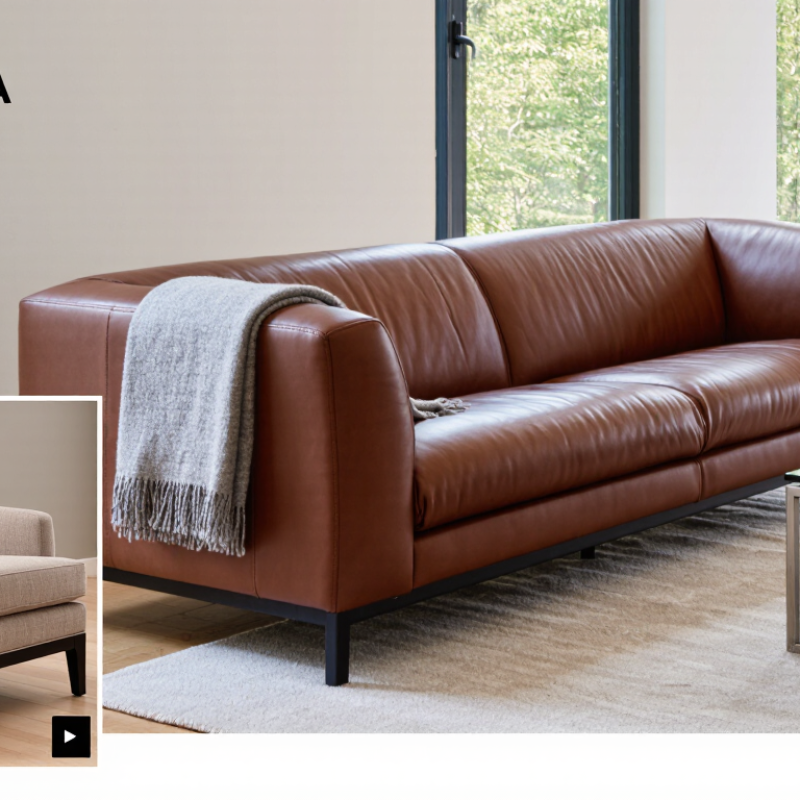
A leather sofa can feel surprisingly cold in winter, even inside a heated room. Leather does not create coldness. It draws warmth from your skin faster than fabric does. Its dense surface feels smooth, firm, and immediately cool against bare legs or hands. The sensation is strongest during the first few seconds. Then your body warms the contact area.
Room conditions also matter. A sofa beside a window may receive cold air through small gaps. Concrete floors can lower the temperature around the lower frame. Thin leather, tight upholstery, and less insulating foam may increase the effect. Dark or light color is usually less important than thickness, backing, and airflow. In practical furniture inspections, checking the room temperature near the sofa gives better evidence than judging by touch alone. Touch can mislead us.
A fabric throw, rug, or breathable sofa cover can reduce the initial chill. Letting the heating run evenly also helps, rather than placing the sofa directly beside a heater. Avoid intense heat, because rapid drying may weaken leather finishes and cause cracking. Conditioning should follow the upholstery maker’s care guidance, not guesswork. The simple explanation is useful, but incomplete. Cold leather does not automatically mean poor quality. It may reflect normal heat transfer, a cool room, or an exposed position. A warmer first touch can still depend on design, materials, and maintenance.
A leather sofa can feel cold in winter, even inside a warm room. The reason is heat transfer, not necessarily poor insulation. Your skin may reach about 32–34°C, while the sofa surface remains close to room temperature. When you sit down, heat moves from your warmer body into the cooler leather.
Leather has moderate thermal conductivity. Published measurements in the Journal of Leather Science and Engineering commonly report about 0.14–0.18 W/m·K for dry leather. The exact result changes with thickness, moisture, tanning, and surface coating. Leather also feels smooth and dense, so it touches more skin area than textured fabric. This creates a faster first heat exchange. ASHRAE Handbook—Fundamentals explains that contact materials strongly influence perceived thermal comfort. That cold sensation usually lasts only briefly.
Tips: Place a wool throw over the seat before use. Let sunlight warm the room, but avoid direct heat on the leather. A breathable cushion can reduce the initial shock. Do not cover the sofa with non-breathable plastic. Moisture may become trapped. In practical upholstery checks, small temperature differences feel surprisingly strong. Still, surface feel is not the whole story. Leather quality, foam density, and room humidity also matter. A colder touch does not automatically mean the sofa loses heat continuously.
| Data Dimension | Typical Value or Condition | Effect at First Contact | Meaning for a Leather Sofa |
|---|---|---|---|
| Indoor air temperature in winter | Approximately 18–22°C in a heated room | The sofa surface gradually approaches the surrounding room temperature. | Leather is usually not colder than the room; it simply feels cold compared with warm skin. |
| Typical skin temperature | Approximately 30–34°C at the contact area | Heat moves from the warmer skin into the cooler upholstery. | A larger initial temperature difference creates a stronger cold sensation. |
| Thermal conductivity of finished leather | Approximately 0.14–0.18 W/(m·K), depending on structure and moisture | Leather conducts heat away from the skin more effectively than many loose, porous textiles. | The surface can feel noticeably cool during the first few seconds of contact. |
| Thermal conductivity of common upholstery textiles | Often approximately 0.04–0.06 W/(m·K), depending on weave and air content | Trapped air slows heat transfer from the skin. | Fabric may feel warmer initially even when its surface temperature is the same as leather. |
| Thermal effusivity | Leather typically has higher thermal effusivity than air-filled textile surfaces | Higher effusivity allows the material to absorb heat from skin more rapidly at the interface. | The first-touch sensation is cooler, even though the sofa is not actively removing heat like a refrigerating surface. |
| Surface contact and air gaps | Smooth leather makes relatively close contact with the body; textured fabric can retain more air | More direct contact increases the area available for conductive heat transfer. | A smooth leather seat may feel colder than a fabric seat at the same room temperature. |
| Leather thickness and upholstery layers | The leather cover is thin; foam, fiber, and the frame provide most of the total thickness | The cover controls the initial touch sensation, while the underlying layers control longer-term heat flow. | Dense, firm upholstery can feel cooler for longer than soft, insulating cushioning. |
| Moisture and humidity | Dry winter air commonly has lower relative humidity than summer air | Dry skin and dry upholstery can increase the perception of coolness and reduce comfort. | Moderate indoor humidity and a soft throw can improve perceived warmth without changing the leather itself. |
| Warm-up after sitting | The contact area warms progressively as the body supplies heat | The temperature difference between skin and leather decreases over time. | The sofa generally feels less cold after several minutes of continuous contact. |
| Practical ways to reduce the cold sensation | Use a fabric throw, cushion, heated room, or seat cover before use | An additional textile layer introduces insulating air and reduces direct heat transfer. | The sofa can feel warmer without altering its leather surface or structure. |
Note: Values are typical engineering ranges for leather and upholstery materials. Actual performance varies with leather finish, moisture content, foam density, surface texture, room temperature, and body contact pressure.
A leather sofa often feels cold because its surface quickly draws heat from your skin. The leather is not necessarily colder than the room. Its smooth, dense structure simply transfers warmth more efficiently than fabric. In a room at 16°C, a bare leather seat may feel noticeably chilly for several minutes. I once blamed the material itself, but a thermometer showed the real issue was poor heating and an uninsulated floor.
Room temperature changes the sofa’s comfort quickly. Most homes feel comfortable around 18–24°C, although personal preference varies. Place a thermometer near the sofa, not beside a radiator. Direct heat can dry the leather unevenly and may damage its finish over time. Curtains, rugs, and a small gap from cold walls can reduce heat loss. Small changes matter.
Humidity also affects leather’s condition and feel. Very dry winter air can remove moisture from the hide, making it feel stiff or slightly rough. Excessive humidity may encourage musty odors, surface swelling, or mold growth. A hygrometer can help monitor the room. Aim for roughly 40–60% relative humidity. This is a useful guide, not a perfect rule. Wipe spills promptly, avoid aggressive cleaners, and let the sofa warm naturally. Do not place it against a heater.
Leather can feel colder than fabric upholstery even when both sofas share the same room temperature. The reason is heat transfer. Published upholstery testing based on ASTM C177 places dense leather near 0.15 W/m·K, while lofted textile layers can approach 0.05 W/m·K. Higher conductivity moves heat away from your skin faster. That feels surprising.
Fabric also holds tiny pockets of still air between fibers. Air has a thermal conductivity of about 0.026 W/m·K, according to NIST material-property data. These air spaces act like a small insulating layer. Smooth leather has fewer gaps at the contact surface. Your hand therefore loses warmth more quickly after touching it. The difference is real.
ISO 11092 also shows that thermal comfort depends on thermal resistance, thickness, backing, and moisture transfer. A leather sofa with dense foam may feel colder than one with breathable padding. Room humidity matters, too. In practical upholstery checks, a simple palm test can mislead because surface finish changes the first few seconds of contact. A fabric cover may feel warm immediately, yet retain heat poorly later. This comparison is not perfect. Construction often matters more than the cover alone.
Representative thermal effusivity of common upholstery surface materials
Leather typically has much higher thermal effusivity than fabric. It draws heat away from the skin more quickly during initial contact, creating a colder sensation even when both sofa surfaces are at the same room temperature. The values shown are representative calculations using typical thermal conductivity, density, and specific heat values for upholstery materials.
China Best Leather Sofa: Why Does It Feel Cold in Winter?
How to Keep a Leather Sofa Warmer in Winter
A leather sofa often feels cold because its surface draws heat from your skin quickly. Leather is not necessarily colder than fabric. Its smooth, dense surface transfers body heat more efficiently. A cold room makes this sensation stronger, especially near windows or uninsulated walls.
Keep the room between 18 and 22°C when possible. Move the sofa away from drafts, cold glass, and exterior doors. A thick cotton or wool throw creates an immediate insulating layer. Add a cushion behind your back, too. It reduces contact with the cold upholstery. A rug beneath the sofa can also block chill from hard flooring.
Warm the room gradually. Avoid placing heaters directly beside the sofa, because concentrated heat may dry the leather or damage its finish. Check the surface after several heating cycles. If it feels stiff, apply a conditioner approved for finished leather. Test it on a hidden area first. Never soak the upholstery.
I once used an electric blanket on a leather seat. It felt effective, but the heat became uneven. I would not repeat that method without checking its safety instructions. A breathable throw is slower, yet more dependable. Wipe away winter moisture promptly, because damp leather can feel colder and develop marks.
Leather transfers heat from your skin quickly. It may feel cold, even when its actual temperature matches the room. A 16°C room can make the seat feel chilly for several minutes.
Not necessarily. Dense leather usually moves heat faster than fabric. Fabric traps tiny air pockets, creating a light insulating layer. The difference feels obvious at first touch.
Many homes feel comfortable between 18–24°C. Personal preference still matters. Check the temperature beside the sofa, not beside a radiator.
Dry air can make leather stiff or slightly rough. High humidity may cause musty smells, swelling, or mold. Aim for roughly 40–60% relative humidity.
Keep it away from heaters and cold exterior walls. Leave a small gap behind it. Curtains and rugs can reduce heat loss around the sofa.
Yes. Direct heat may dry one area unevenly. It can also weaken the finish over time. Let the sofa warm naturally.
Place a thermometer near the seat and use a hygrometer nearby. These tools show room conditions more reliably than your palm. I once blamed the leather incorrectly.
Yes. Foam density, backing, thickness, and moisture transfer all matter. A heavily padded sofa may feel colder than a breathable one. The cover alone does not tell the whole story.
Wipe spills promptly with gentle care. Avoid aggressive cleaners and unnecessary moisture. Some advice sounds simple, but I may still underestimate small daily changes.
Only partly. Surface finish can change the first few seconds of contact. A fabric cover may feel warm immediately, yet its later heat retention can differ. The comparison is imperfect.
A leather sofa may feel surprisingly cold in winter because leather quickly draws heat away from your body when you sit down. Unlike fabric, which contains tiny fibers that trap warm air, leather has a smooth, dense surface that transfers heat efficiently. This explains why many people ask, “why does my leather sofa feel cold in winter?” The effect is more noticeable when the room temperature is low, especially near windows, exterior walls, or unheated floors. Low humidity can also make the air feel sharper and reduce the sense of warmth around the sofa.
To make a leather sofa more comfortable during colder months, place it away from drafts and cold surfaces, maintain a steady indoor temperature, and use soft blankets, throws, or cushions as insulating layers. Allowing the room to warm gradually before use can also help. With suitable room conditions and simple coverings, leather can remain comfortable, durable, and inviting throughout the winter.

Hark Homes